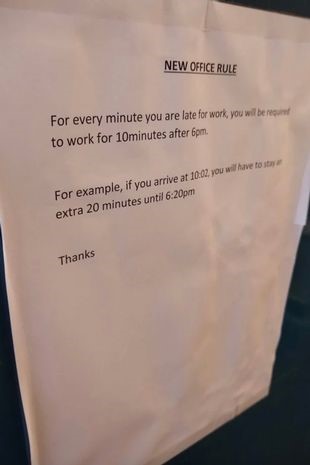
Millions of people will have seen this post go viral over social media and news outlets this week. It depicts notice of a “new office rule” posted by a manager which reads: “For every minute you are late for work, you will be required to work for 10 minutes after 6pm. For example, if you arrive at 10.02, you will have to stay an extra 20 minutes until 6.20pm. Thanks.”
The rule is certainly provoking heated comments from both sides of the coin.
It has invited ridicule and disbelief, with many calling the manager out as being “unfair” and “harsh”, but there are also comments of support from those who believe the manager is in the right for imposing such rules.
But as controversial as it may be, is it actually breaking the law?
Kate Palmer, HR Advice & Consultancy Director at Peninsula, weighs in on the subject and shares her advice on the most appropriate – and legal – way to manage the issue:
“For an employer to feel the need to publish a poster like this, it seems reasonable to assume that there is a wider workplace issue of lateness. It should go without saying though, that expecting an extra nine minutes in exchange for being one minute late, is not ethical, nor legal.
“A better way to reduce tardiness is to get to the root of why it is happening in the first place and put effective measures in place to support employees to get to work on time. This is particularly important where there are genuine grounds for being late, for example, if the employee has a disability or caring responsibilities.
“However, where lateness is due to an employee’s conduct or behaviour, they can be managed in line with normal disciplinary procedures.
“Implementing a policy which requires staff to work overtime for each minute they are late can pose a significant risk of constructive dismissal claims.
“Similarly, employers who require employees to stay later than their finish time should ensure there is a clause in the contract to allow them to do so and provide them with full pay for all working hours.
“Failing to pay for this time will likely lead to a successful unlawful deductions from wages claim and could see employers breaching national minimum wage regulations which would result in fines and being named and shamed by government.”